

EPR Shares InDiCo Policy Recommendations at Fundación Rey Ardid Webinar on Digital Skills for Social Inclusion and Employment
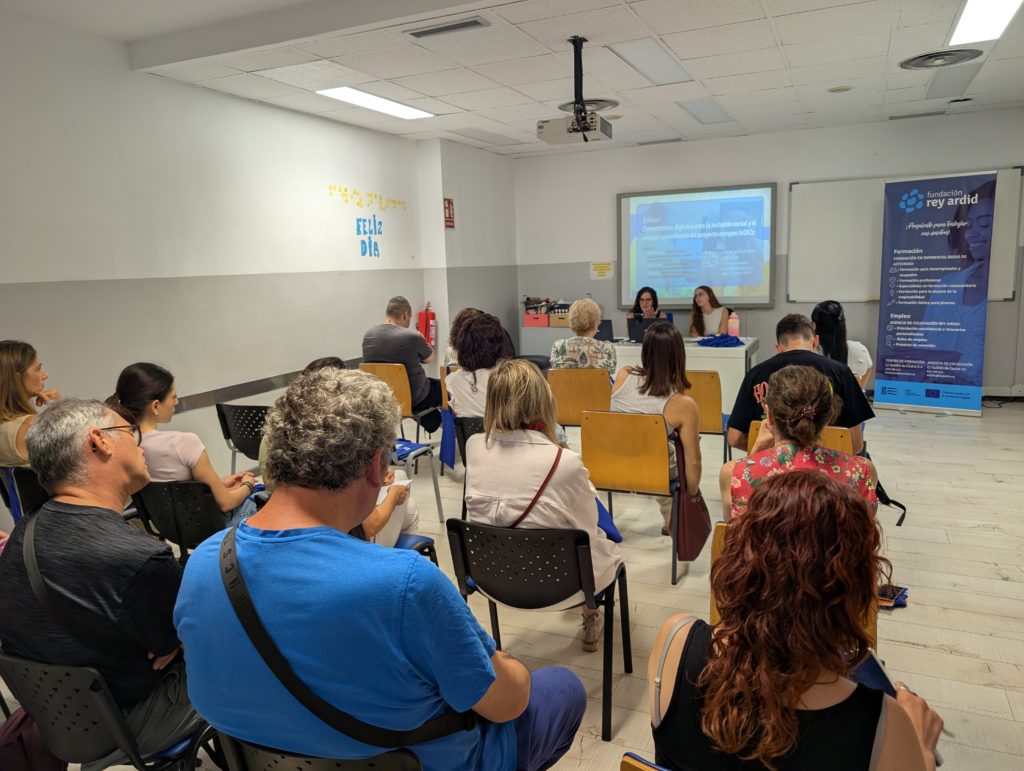
On 16 July, Fundación Rey Ardid hosted the webinar “Digital Skills for Social Inclusion and Employment: Lessons Learned from the European InDiCo Project”, bringing together 47 participants (23 in person, and 24 online) from across the social inclusion, employment and disability sectors.
The event provided an opportunity to showcase key outcomes and lessons learned from the InDiCo Project, which aims to strengthen the digital competences of persons with learning difficulties as a pathway towards greater social inclusion and improved access to the labour market.
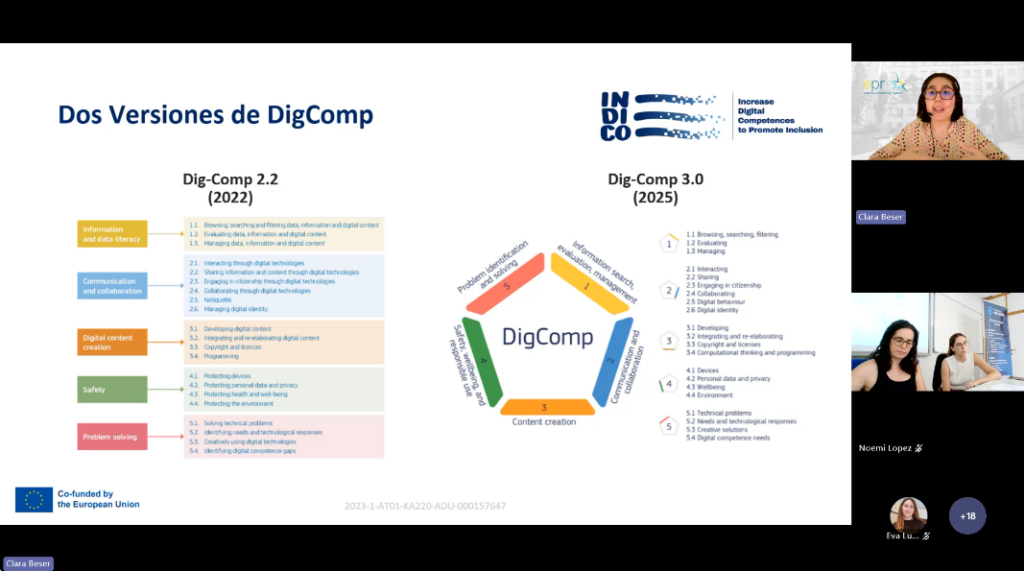
The webinar also showcased InDiCo’s practical achievements. Building on DigComp and the Austrian Digital Competence Framework, the project has developed a methodology adapted to the needs of persons with learning difficulties to evaluate basic digital competences, a catalogue of basic digital competences relevant for persons with learning difficulties, and a digital platform to assess and validate basic digital competences of persons with learning difficulties. The project’s pilot activities, implemented across Spain, Portugal, Austria, Germany and Greece, demonstrated that digital competences can be successfully developed when training is adapted to individual needs and supported by accessible methodologies, person-centred learning approaches and appropriate guidance.
Representing the European Platform for Rehabilitation (EPR), Clara Beser, Policy Officer, presented the project’s importance in the European context, and shared the project’s policy recommendations. She presented findings from the InDiCo project on the implementation of the European Digital Competence Framework for Citizens (DigComp) and the challenges faced by people with learning difficulties in accessing digital learning opportunities. Particular attention was given to the European Union’s ambition, through the Digital Decade Strategy, for at least 80% of Europeans to possess basic digital skills by 2030. However, current data show that significant gaps remain, especially among groups at greater risk of exclusion, including people with disabilities. In this context, projects such as InDiCo play a vital role in ensuring that no one is left behind in Europe’s digital transition. A key focus of EPR’s presentation was the policy challenges identified through the project’s research, as well as the policy recommendations at national and European levels to address them.
A particularly valuable aspect of the event was the participation of individuals who took part in the InDiCo pilot activities. Their testimonies and reflections provided first-hand insights into the impact that developing digital competences can have on everyday life, social participation and access to employment. Their contributions reinforced the importance of designing policies, tools and methodologies that respond to the real needs and aspirations of end users.
EPR would like to thank Fundación Rey Ardid for organising this successful event and acknowledge the contributions of all speakers:
- Eva Lumbreras Bustos, Employment Technician, Fundación Rey Ardid
- Noemí López Martínez, European Projects Manager, Fundación Rey Ardid
- Clara Beser, Policy Officer, European Platform for Rehabilitation (EPR)
As a partner in the InDiCo Project, EPR remains committed to promoting policies and practices that ensure that the digital transformation creates opportunities for everyone, leaving no one behind.
-
EQUASS
The European Quality in Social Services (EQUASS) is an initiative of the European Platform for Rehabilitation (EPR). EQUASS enhances the social sector by engaging social service providers in continuous improvement, learning and development, in order to guarantee service users quality of services throughout Europe.

-
 This website received support from the European Union’s Citizens, Equality, Rights and Values (CERV) programme. For further information please click here.
European Platform for Rehabilitation – Avenue des Arts, 8 – 1210 Brussels – Belgium
Tel. +32 2 736 54 44 – mail: epr@epr.eu
Co-funded by the European Union. Views and opinions expressed are however those of the author(s) only and do not necessarily reflect those of the European Union or the granting authority. Neither the European Union nor the granting authority can be held responsible for them.
Copyright © 2017 - 2026 | Privacy Policy | Cookie Policy ALYS