

-
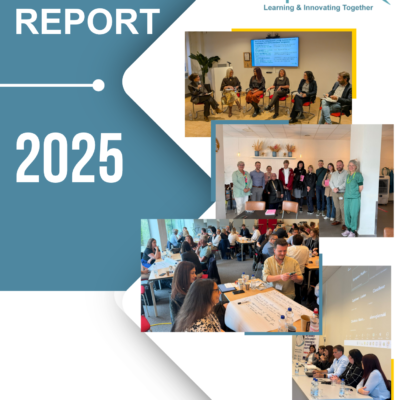
EPR Annual Report 2025
In the EPR Annual Report 2025, we share our key activities, strategic progress and accomplishments that shaped the past year. Through our work, we reflect our continued commitment to delivering our mission, creating lasting value for our members and stakeholders, and making a meaningful impact and difference in the communities we serve. Read the report […]
Read more > -
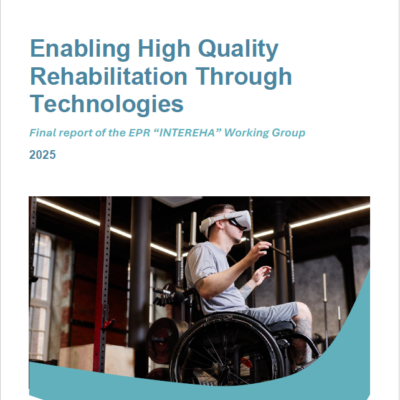
Enabling High Quality Rehabilitation Through Technologies
In the last two years, members of the EPR INTEREHA Working Group, led by Fondazione Don Gnocchi, worked together to analyse a set of technology applications in rehabilitation and social services that were selected based on the level of interest of all participants. Medical, social and organisational aspects were addressed, as well as existing challenges and future opportunities. The […]
Read more > -
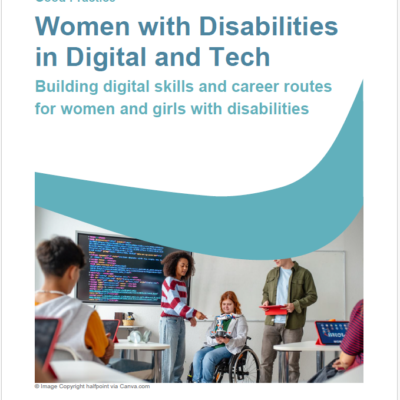
Women with Disabilities in Digital and Tech
In recent years, increased efforts have been made at the EU-level to promote the participation of women and girls in the Science, Technology, Engineering and Mathematics (STEM). However, such policies miss a nuanced approach when it comes to girls and women with disabilities. Women and girls with disabilities experience the intersection of gender inequality and […]
Read more > -
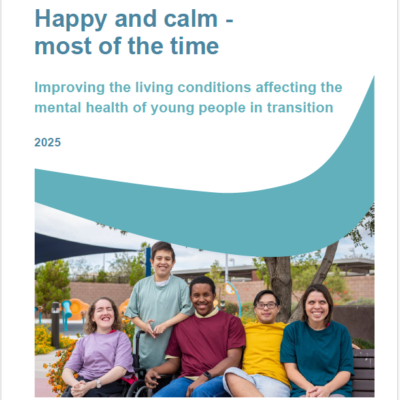
Happy and calm – most of the time: Improving the living conditions affecting the mental health of young people in transition
This paper explores the mental health and well-being of young people – both with and without disabilities – during critical transitions from adolescence to adulthood (transition from education to training, from training to employment, transition from living with the family to living independently and build a life). It recognising that while many young people thrive, […]
Read more > -
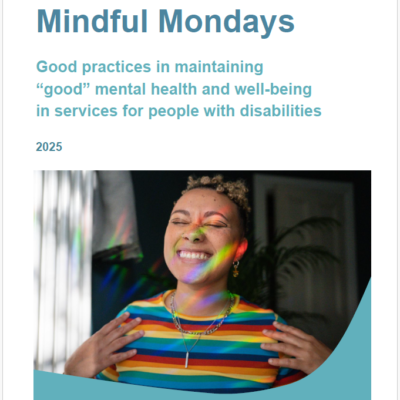
Mindful Mondays: Good practices in maintaining “good” mental health & well-being in services for people with disabilities
In comparison to other areas of health and care, mental health is still a relatively “young” topic, with numerous unknowns and limited understanding for cause and effect of conditions. Through the EPR Mental Health Working Group, experts and service-providers to persons with disabilities from across Europe regularly exchange knowledge, monitor trends in service provision, and […]
Read more > -
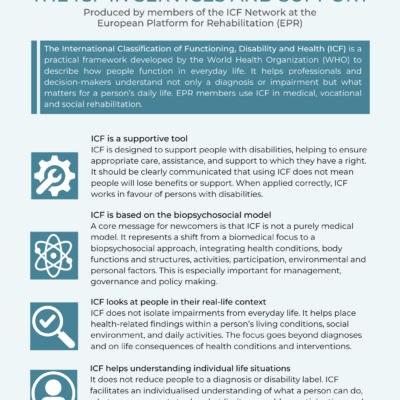
The ICF in Services and Support
The International Classification of Functioning, Disability and Health (ICF) is a practical framework developed by the World Health Organization (WHO) to describe how people function in everyday life. It helps professionals and decision‑makers understand not only a diagnosis or impairment but what matters for a person’s daily life. This EPR fact sheet explains the main […]
Read more > -
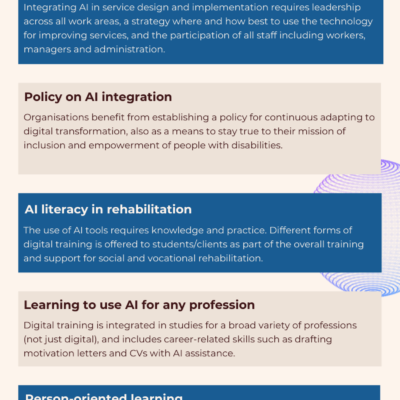
Guidance for Integrating AI in Service for People with Disabilities
Artificial Intelligence (AI) is increasingly involved in many aspects of living, learning, working and communicating. Persons with disabilities and professionals working in services and support observe that knowledge of and proficiency with AI tools is becoming important in daily activities. As this trend continuous, it is recommended that service providers be proactive with regards to […]
Read more > -
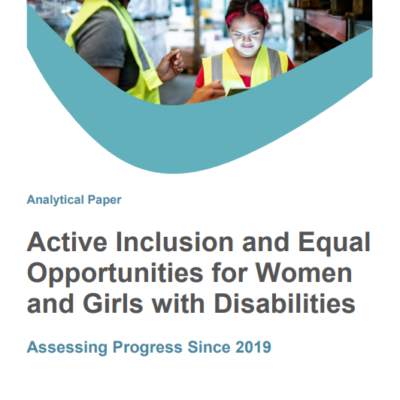
Active Inclusion & Equal Opportunities for Women & Girls with Disabilities
In this paper, EPR takes stock of developments that have taken place in the EU since the 2019 EPR Analytical Paper “Women and girls with a disability – Active Inclusion and Equal Opportunities”. It also evaluates the evolution and remaining gaps during this period by looking into the existing EU and international policy frameworks to […]
Read more > -
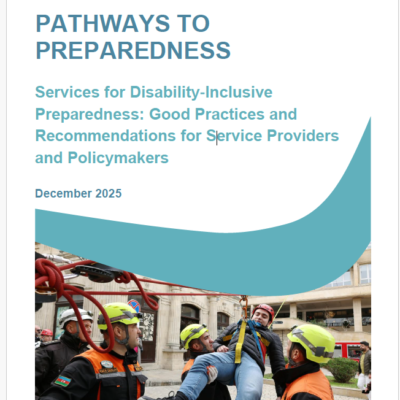
Pathways to Preparedness: Services for Disability-Inclusive Preparedness
EPR Publication Pathways to Preparedness This publication is the result of the work of the 2025 EPR Task Force on Pathways to Preparedness, established to foster meaningful dialogue between EPR members and policymakers on ensuring that persons with disabilities and service providers are actively included in, and contribute to, preparedness policy. It provides insights and […]
Read more > -
EPR Briefing – The Union of Skills Strategy
This Briefing aims to help readers navigate the European Commission’s Communication on the Union of Skills, and its subsequent policy deliverables. Published in March 2025 by the European Commission, the Union of Skills presents an EU-level strategy “to support the development of quality, inclusive and adaptable education, training and skills systems to increase the EU’s […]
Read more >
-
EQUASS
The European Quality in Social Services (EQUASS) is an initiative of the European Platform for Rehabilitation (EPR). EQUASS enhances the social sector by engaging social service providers in continuous improvement, learning and development, in order to guarantee service users quality of services throughout Europe.

-
 This website received support from the European Union’s Citizens, Equality, Rights and Values (CERV) programme. For further information please click here.
European Platform for Rehabilitation – Avenue des Arts, 8 – 1210 Brussels – Belgium
Tel. +32 2 736 54 44 – mail: epr@epr.eu
Co-funded by the European Union. Views and opinions expressed are however those of the author(s) only and do not necessarily reflect those of the European Union or the granting authority. Neither the European Union nor the granting authority can be held responsible for them.
Copyright © 2017 - 2026 | Privacy Policy | Cookie Policy ALYS