

Happy and calm – most of the time: Improving the living conditions affecting the mental health of young people in transition
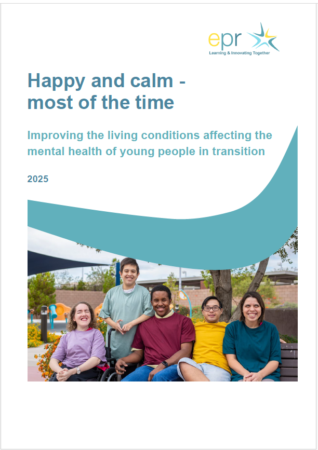 This paper explores the mental health and well-being of young people – both with and without disabilities – during critical transitions from adolescence to adulthood (transition from education to training, from training to employment, transition from living with the family to living independently and build a life). It recognising that while many young people thrive, others face challenges such as mental health disorders, neurodivergence, or multiple conditions that can affect their participation in education, employment and community life.
Emphasising that early intervention, preventive support and accessible services are essential investments in the future of both individuals and society, the paper examines how social service providers support young people in vulnerable situations. Drawing on the work of experts in the EPR Youth Working Group, which brings together rehabilitation and support organisations across Europe, the paper highlights insights from practice, policy monitoring and EU-supported cooperation projects. Central to the paper are the voices and experiences of young people themselves, gathered through interviews alongside perspectives from social workers, therapists and trainers. It first outlines the broader living conditions shaping the lives of young people in European communities and concludes by presenting selected good practices identified by the Working Group in 2025.
Access the paper here.
-
EQUASS
The European Quality in Social Services (EQUASS) is an initiative of the European Platform for Rehabilitation (EPR). EQUASS enhances the social sector by engaging social service providers in continuous improvement, learning and development, in order to guarantee service users quality of services throughout Europe.
-
 This website received support from the EPR framework partnership agreement with the European Commission, DG Employment, Social Affairs and Inclusion for 2018-2022 from the EU Programme for Employment and Social Innovation (EaSI). For further information please consult: http://ec.europa.eu/social/easi