

One Group, Two Starting Points: Adapting Digital Skills Training to Learners’ Real Needs
Author: Eva Lumbreras Bustos, Employment Technician, Fundación Rey Ardid
The InDiCo – Increase Digital Competences to Promote Inclusion project aims to reduce the digital gap and promote the social inclusion of people with learning difficulties. Using the European DigComp Framework, we seek to enable these individuals to acquire the basic digital skills for functioning in an increasingly digitalised world, preventing them from being excluded from educational, employment and social opportunities.
In the first half of the project, we developed a competence-orientated methodology for assessing and validating basic digital competences for persons with learning difficulties in line with the EU DigComp Framework. This Framework aims to help all people in Europe improve their digital skills for learning, jobs, and everyday life and to use digital technology safely, confidently, and effectively. It describes key areas of digital competences and gives educators a clear guide for teaching them.
Building on this foundation, InDiCo brought together educators from all partner organisations for a two-day capacity-building training on the InDiCo assessment and validation framework and tool, organised by Rey Ardid. Participants learned how to use it to make basic digital competences of persons with learning difficulties visible, develop customised learning paths for this target group and assess the acquired basic digital skills. Educators then applied the methodology within their own organisations, testing how well the InDiCo method works in practice with persons with learning difficulties.
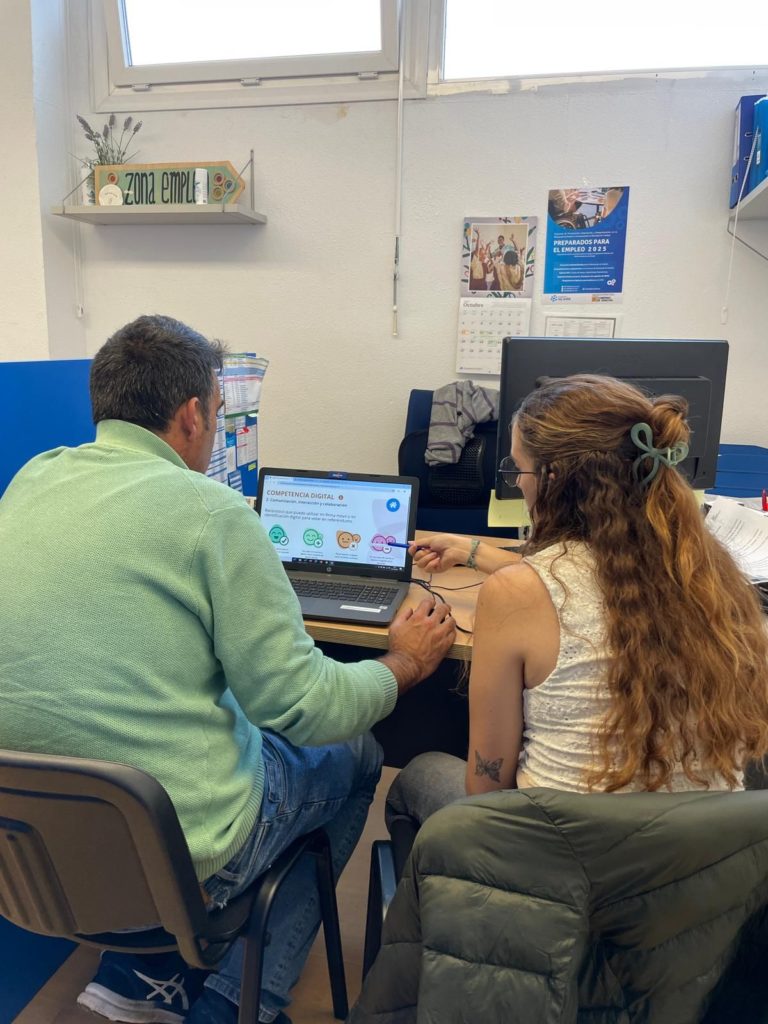
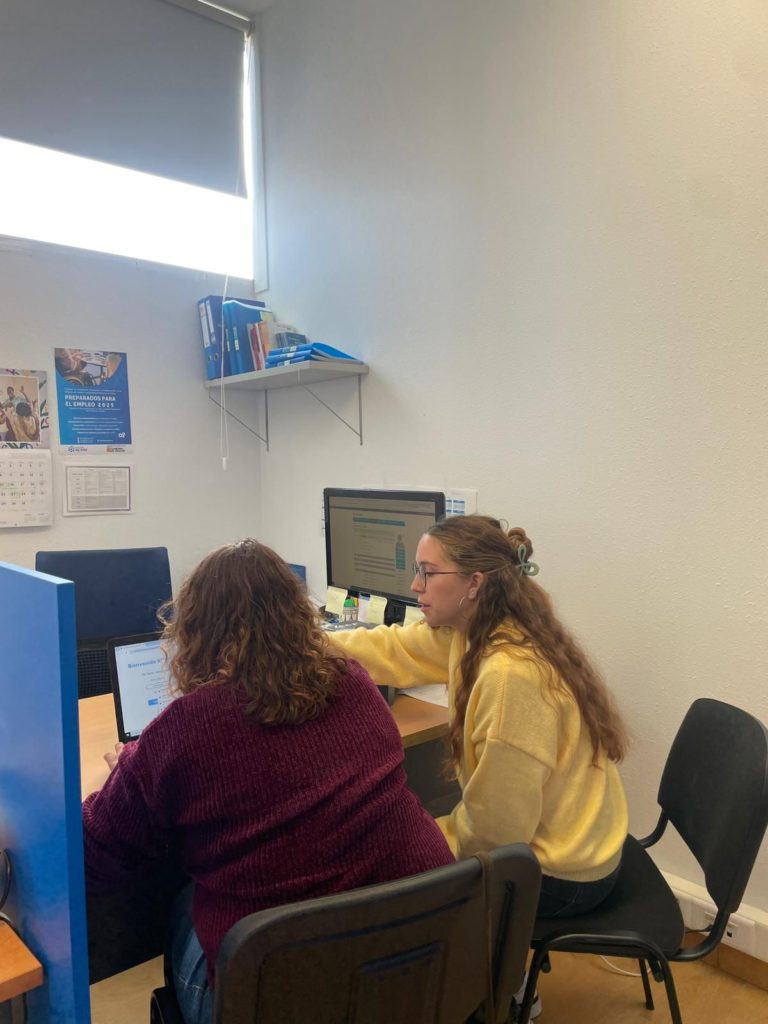
During this pilot phase of the project, our main objective was to implement the developed InDiCo methodology and test its effectiveness in real-life contexts. To achieve this, we worked with 6 participants from mid-October to mid-December. The process began with a self-assessment phase, which allowed us to identify each person’s level of digital skills. Then, we carried out individualised trainings, adapting the content and activities to the specific needs of each user.
In the process, we observed two distinct profiles:
- Four participants with more advanced digital skills: we worked with them on all the skills included in the InDiCo catalogue we designed, placing particular emphasis on the most basic ones (skill levels 0, 1 and 2).
These individuals demonstrated a good command of intermediate skills (3, 4 and 5), performing tasks such as purchasing train tickets online. However, the introduction to Artificial Intelligence (AI) was more complex, although they did learn to interact slightly with tools such as ChatGPT and Copilot.
- Two participants with no digital skills: With this group, we devoted all the available time to working on skill levels 0, 1 and 2, focusing on basic aspects such as turning on the computer, closing and minimising windows, and performing simple searches. The assimilation of content was slower, requiring repeated sessions to consolidate learning.
The pilot confirmed that using the InDiCo methodology, along with personalised support, progress in building digital skills is possible even for individuals with significant challenges. Participant motivation and engagement were key to success.
On the other hand, we also identified some challenges:
- Need for constant motivation to encourage learning, especially in users with greater difficulties, which is also related to the difficulty in remembering content.
- Some skills are not perceived as necessary by users at the time of piloting (e.g., learning how to shop online), so they do not want to work on them.
- Need to adapt the catalogue to each individual situation: with 2 users, we observed a complete lack of digitalisation skills, so it was necessary to create a specific catalogue with the skills that were being worked on. This highlights the importance of having a flexible range of options for different levels and needs.
- Need of time to consolidate skills (due to learning difficulties), especially in practical areas such as using social media or how to send a CV.
In conclusion, piloting the InDiCo methodology has allowed us to verify its effectiveness, and the importance of personalisation in digital learning. This process further reinforced our commitment to continue working to ensure that everyone has access to the necessary tools and that no one is left behind in the digital transformation.
-
EQUASS
The European Quality in Social Services (EQUASS) is an initiative of the European Platform for Rehabilitation (EPR). EQUASS enhances the social sector by engaging social service providers in continuous improvement, learning and development, in order to guarantee service users quality of services throughout Europe.

-
 This website received support from the EPR framework partnership agreement with the European Commission, DG Employment, Social Affairs and Inclusion for 2018-2022 from the EU Programme for Employment and Social Innovation (EaSI). For further information please consult: http://ec.europa.eu/social/easi